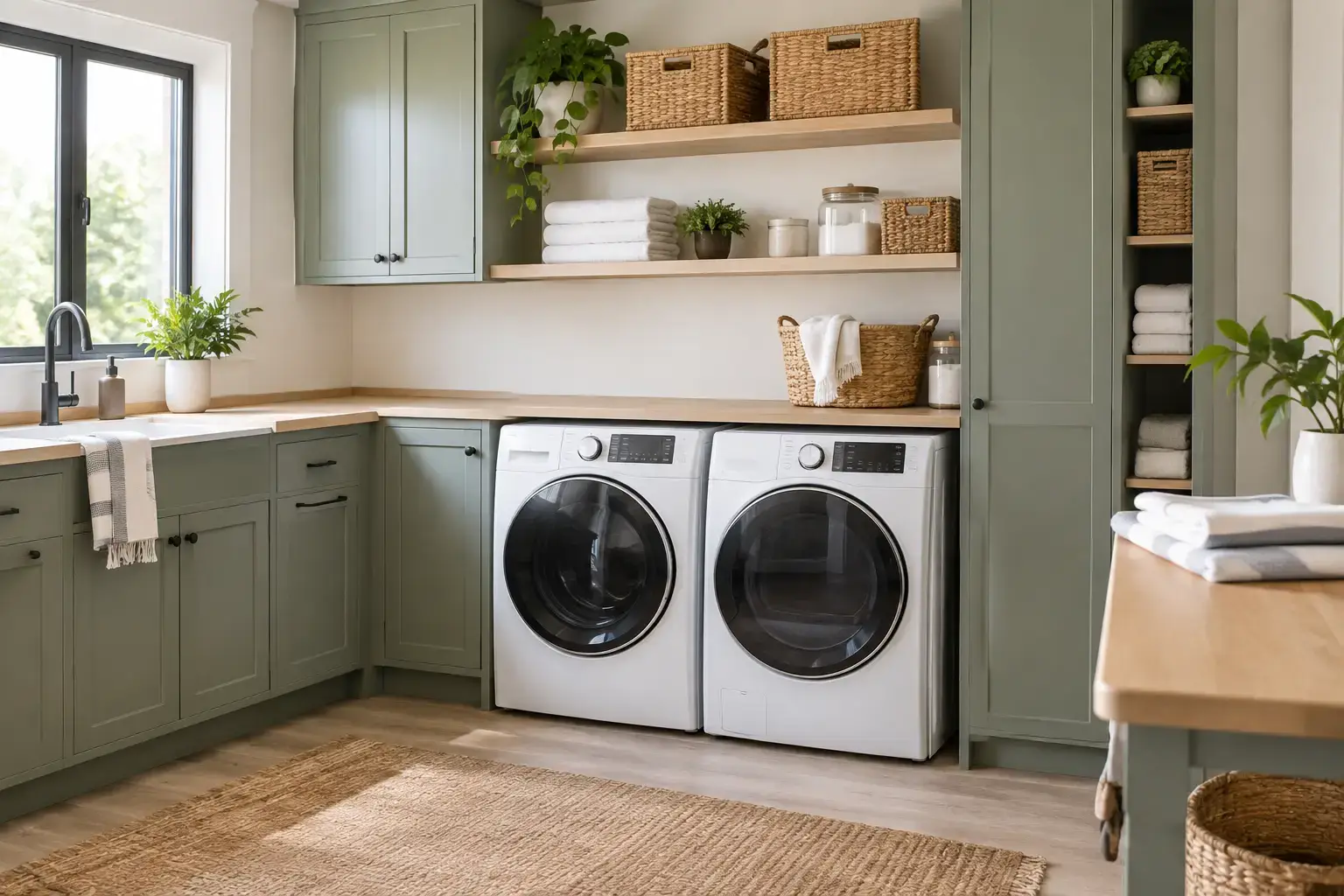
A laundry room earns its keep every day. It catches muddy clothes after ball practice, towels from the lake, bedding from guests, and the steady pile that comes with a full household. A good guide to custom laundry rooms starts with that reality: this space should make work easier, not create another mess to manage.
For homeowners around Auburn, Opelika, Notasulga, and Lake Martin, custom cabinetry and built-ins can turn an undersized utility room, pass-through hallway, mudroom combination, or garage entry into useful square footage. The goal is not to fill every wall with cabinets. It is to build a room around the way your household actually handles laundry.
Start With the Work That Happens There
Before choosing cabinet color, decide what needs to happen in the room from the moment dirty clothes come in to the moment clean clothes leave. Some homes need a simple wash-and-fold station. Others need room for pet supplies, cleaning tools, sports gear, linens, or a drop zone for bags and shoes.
Think through the usual path. Where do dirty clothes enter? Is there enough space to sort them? Do you fold laundry in the room or carry baskets elsewhere? Does someone need a place to hang work clothes, school uniforms, or air-dry items? These answers shape the layout better than a photo ever will.
A family with young children may need open bins and easy-to-reach hampers. A lake home may need a durable spot for damp towels and swimwear. Retirees may place a higher value on counter height, clear floor space, and storage that does not require bending or reaching overhead. Custom work allows those needs to lead the design.
Plan the Layout Before the Cabinets
The best-looking cabinets cannot fix a cramped path around open appliance doors. Start with appliance locations, doors, windows, plumbing, and electrical connections. Then identify where a person can stand, turn, carry a basket, and work comfortably.
Side-by-side machines often create the most usable folding surface when topped with a continuous counter. A front-loading washer and dryer can fit under a built-in counter, giving the room a clean, finished look and a dependable place to sort clothes. Pedestals or raised platforms can make loading easier, but they also change the height of the folding surface and may limit overhead storage.
Stacked machines free up wall space in a small laundry room. That can be the right choice in a compact home, condo, or secondary laundry area, especially when tall cabinets and a hanging section are more valuable than a long counter. The trade-off is that folding space must be built elsewhere, perhaps on an adjacent wall or in a pull-out work surface.
Do not overlook door swings. A swing door, appliance door, cabinet door, and pull-out hamper can compete for the same few feet. In tight rooms, a pocket door, sliding door, or carefully placed open shelving may make daily use easier. A custom plan should respect the room you have rather than force a showroom layout into it.
Build Storage Around Real Household Supplies
Laundry rooms collect more than detergent. They hold stain treatment, cleaning products, paper goods, extra linens, batteries, light bulbs, pet items, and the things nobody knows where else to put. Closed cabinets keep the visual clutter down, while a few open elements can keep everyday tasks within reach.
Upper cabinets are useful for bulk supplies and seasonal items, but they should not become the only storage in the room. Lower drawers, pull-out trays, and tall cabinets make frequently used items easier to access. Deep drawers can hold towels or cleaning supplies without forcing you to search behind a row of bottles.
A built-in hamper system can be worth the space when laundry sorting is a constant chore. Separate pull-outs for lights, darks, towels, or delicates can keep clothes off the floor and make wash day more efficient. In a smaller room, one large pull-out may be more practical than several narrow compartments. It depends on how many people use the space and whether everyone will actually sort as they go.
For households that use the laundry room as a mudroom, consider a bench, hooks, shoe storage, and a tall cabinet for backpacks or outdoor gear. This combination works especially well near a garage or side entrance. It also asks more of the room, so strong cabinet construction and durable finishes matter.
A Guide to Custom Laundry Room Materials
Laundry rooms deal with moisture, heat, detergent spills, and hard use. Material choices should reflect that. A finish that looks good in a formal dining room may not be the best fit beside a washer that runs several loads a week.
Cabinet boxes, doors, and shelving should be made for the weight they will carry. Shelves holding detergent jugs, stacks of towels, or bulk household goods need proper support. Hinges and drawer hardware should stand up to repeated use. These details are easy to miss at first, but they separate built-in storage that lasts from storage that starts sagging or sticking after a few years.
For countertops, the right choice depends on the job. A durable laminate can be practical and easy to clean. Solid wood brings warmth and character, particularly in a laundry room that is visible from the main living area, but it needs a finish suited to moisture and spills. Stone or solid-surface counters can provide strong water resistance, though they may use more of the project budget.
Paint color also deserves practical thought. Light finishes can make a compact room feel open, while medium or darker colors can hide scuffs near an entry. If the laundry room connects to a kitchen, mudroom, or hallway, matching or complementing the home’s existing woodwork helps the space feel intentional instead of added on.
Make Room for Folding, Hanging, and Drying
A counter over the machines is one of the most useful features in a custom laundry room, but it is not the only work surface worth considering. A narrow wall may accommodate a fixed counter, a fold-down surface, or a pull-out shelf. Even a modest folding area can prevent clean clothes from ending up on a bed or dining table.
Hanging space is just as valuable. A rod installed beneath upper cabinets works well for shirts coming out of the dryer. A wall-mounted drying rack can serve delicate items without taking up floor space. In a larger room, a dedicated hanging section beside a tall cabinet gives clothes a place to wait before they are put away.
Allow for the less glamorous work, too. Keep a spot for a small trash can, a broom or mop, and a place to set a basket without blocking the walkway. If you iron regularly, a built-in board or a cabinet designed for the iron and supplies can keep the room orderly. If you rarely iron, that space may be better used for linens or cleaning equipment.
Do Not Design Past the Budget
Custom laundry rooms can range from a simple counter and a few cabinets to a fully built-out utility space with tall storage, drying racks, hampers, and a mudroom wall. The smartest investment is usually the work that solves your biggest daily frustration first.
If the room lacks folding space, start there. If supplies are always visible, closed storage may be the priority. If the room serves as the family entrance, durable cubbies and a bench may offer more value than decorative details. Good custom work does not require adding every possible feature. It requires making each feature earn its place.
It is also wise to leave access where it is needed. Washers, dryers, shutoff valves, vents, and electrical connections will eventually need service. Cabinets should be built around those practical requirements, not over them. A capable craftsperson will help plan for the finished look and the years of maintenance that come after installation.
For homeowners who want a room shaped around their home instead of an off-the-shelf cabinet package, Saugahatchee Woodworks builds custom woodwork with everyday use in mind. The right built-ins can make a laundry room calmer, cleaner, and more useful without losing the honest, hardworking purpose of the space.
A well-planned laundry room will not make laundry disappear. It can give every basket, bottle, towel, and muddy pair of shoes a proper place, which is often the difference between a room you avoid and one that works hard right alongside your family.
Leave a Reply