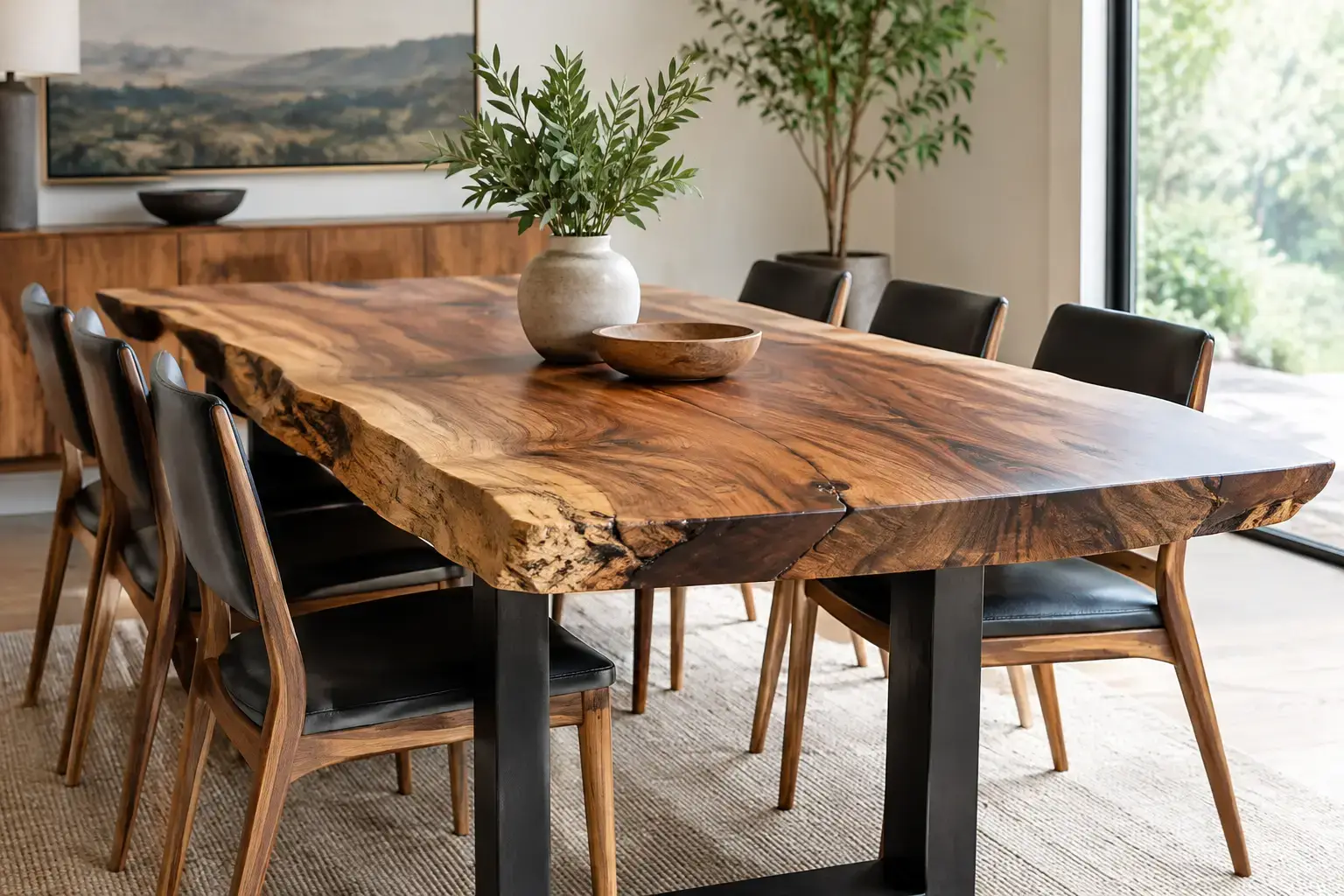
A good dining table sees the real parts of family life: weeknight meals, school projects, holiday dishes, coffee with neighbors, and the occasional scratch from a chair pushed back too quickly. Live edge tables are made for that kind of use. They bring the natural shape and character of a hardwood slab into the home, while still giving you a solid, useful surface built around the way your family gathers.
Unlike a factory-made table designed to fit a shipping box and a price point, a custom live edge piece starts with the wood itself. The grain, width, movement, and natural edge of the slab all help shape the finished table. That means no two are exactly alike, and that is the point.
What Makes Live Edge Tables Different?
A live edge table keeps part of the tree’s original outer contour rather than cutting every edge into a perfectly straight line. The bark is typically removed, and the edge is cleaned, stabilized, and sanded smooth. What remains is the natural line of the wood – sometimes gentle and narrow, sometimes bold and full of character.
The result can feel right at home in several settings. In a newer Auburn home, a walnut or white oak table can add warmth to a clean, simple dining room. In a Lake Martin cabin or second home, a larger slab table can give the main gathering space a practical centerpiece with a connection to the outdoors. In an older Opelika home, the right wood species and finish can sit comfortably beside traditional trim, floors, and furniture.
The live edge is not a shortcut or a rough board brought indoors. A well-built table still needs careful flattening, drying, joinery, sanding, and finishing. Its natural look should be backed by sound construction.
Start With How the Table Will Be Used
The best design decision is usually not the wood species or the base style. It is deciding what the table needs to do every day.
A dining table for six needs different proportions than a narrow sofa table, conference table, or lake-house breakfast table. Think about where chairs need to move, how often people will walk around the table, and whether leaves or extra seating matter. A table that looks good in an empty room can become frustrating if there is not enough clearance to pull out a chair or serve a meal.
For a dining table, allow enough room at each place setting for people to sit comfortably without bumping elbows. A wider slab gives more serving space, but an overly wide table can make conversation and passing dishes harder. The right size depends on the room, the number of people who regularly use it, and whether the space needs to work for large gatherings a few times each year.
A custom build earns its value here. Instead of trying to force your room around a standard retail size, the table can be planned for the space you already have.
Choose a Base That Works With the Slab
The base has a major effect on both the look and the function of a live edge table. Metal bases can give a table a clean, straightforward profile and leave room for chairs at the corners. Wood bases can create a more traditional feel and tie the piece to other wood details in the home.
There is no single best option. A pedestal base may make it easier to fit more people around the table, especially when seating changes from day to day. Trestle and leg bases can be very sturdy, but their placement needs to be considered so they do not interfere with chairs. A good builder plans the base around the slab’s weight, length, and intended seating, not simply around a picture online.
Wood Choice Matters More Than Color Alone
Hardwood has character before any stain or finish is applied. Grain pattern, knots, mineral streaks, small cracks, and color variation are part of what make a live edge slab worth using. They should be viewed as natural features, not defects to hide.
Walnut offers deep brown tones and often has a refined, rich appearance. White oak is durable and versatile, with a grain that works well in both modern and traditional rooms. Maple can be lighter and cleaner in appearance, while cherry develops a warmer, deeper color over time. Each species responds differently to light, use, and finish.
Locally sourced wood can also carry a story that matters to homeowners in the Notasulga, Auburn, Opelika, and Lake Martin area. A piece made from regional hardwood may feel more connected to the property than something shipped in from a warehouse. Still, the right choice depends on the slab quality, the desired look, and the conditions where the table will live.
A live edge does not mean every void and crack should be filled or preserved. Some features can be stabilized and incorporated beautifully. Others may affect strength or create a surface that is hard to clean. Good craftsmanship means knowing the difference.
Building for Alabama Homes Means Planning for Movement
Wood moves as humidity changes. That is normal. In Alabama, where seasonal humidity can be hard on wood furniture, a table needs to be built with that movement in mind.
The slab must be properly dried before it becomes furniture. If wood is used before it is ready, it can continue to shrink, warp, or crack after installation. Proper drying takes time, and that time is part of building a table that will hold up.
The way the top is attached to the base matters, too. A solid wood slab should not be locked down in a way that prevents natural expansion and contraction. Hardware and joinery need to allow the top to move while keeping the table stable. This work is mostly unseen, but it separates a lasting piece from one that develops avoidable problems.
Finish selection also deserves practical thought. A dining table needs a finish that stands up to everyday use, not just one that looks good in a photograph. The finish should protect the wood while allowing its grain and natural edge to remain the focus. The right level of sheen depends on the room and the owner’s preference, but durability should stay at the center of the decision.
Expect Natural Character, Not Factory Uniformity
One reason homeowners choose live edge tables is that they do not look manufactured. A slab may have a changing width from one end to the other, a knot near the edge, or a grain pattern that becomes more pronounced in certain light. Those details make the table personal.
That said, natural character should not be confused with poor workmanship. The surface should be level, the edge should be smooth enough for daily use, and the base should feel solid when someone leans on it. If a table rocks, has rough unfinished areas, or relies on excessive filler to hold itself together, those are construction concerns, not rustic charm.
Before commissioning a table, share photos of the room, approximate measurements, the number of seats needed, and any existing furniture or flooring that the piece should complement. A clear conversation early in the process helps prevent a table from feeling too dark, too heavy, too narrow, or out of place once it is in the room.
Caring for a Live Edge Table
Daily care is simple. Wipe up spills promptly, use coasters and trivets, and avoid dragging heavy objects across the surface. A soft damp cloth followed by a dry cloth is usually enough for routine cleaning. Harsh cleaners, abrasive pads, and silicone-heavy furniture sprays can damage or dull the finish.
Keep the table away from prolonged direct sun when possible, since sunlight can change wood color over time. Avoid placing it directly next to a heating vent or in a spot with constant moisture. These steps are not about treating the table like a museum piece. They are practical habits that help a solid wood surface age well.
A well-made table may pick up a few marks over the years. That is part of a family piece being used as intended. The goal is not to keep it frozen in time, but to make sure it remains strong, useful, and worth keeping.
Saugahatchee Woodworks builds custom woodwork around the way local families actually live, with careful attention to fit, material, and lasting construction. The right live edge table should not simply fill a dining room. It should become the place where the best parts of home keep happening.

Leave a Reply