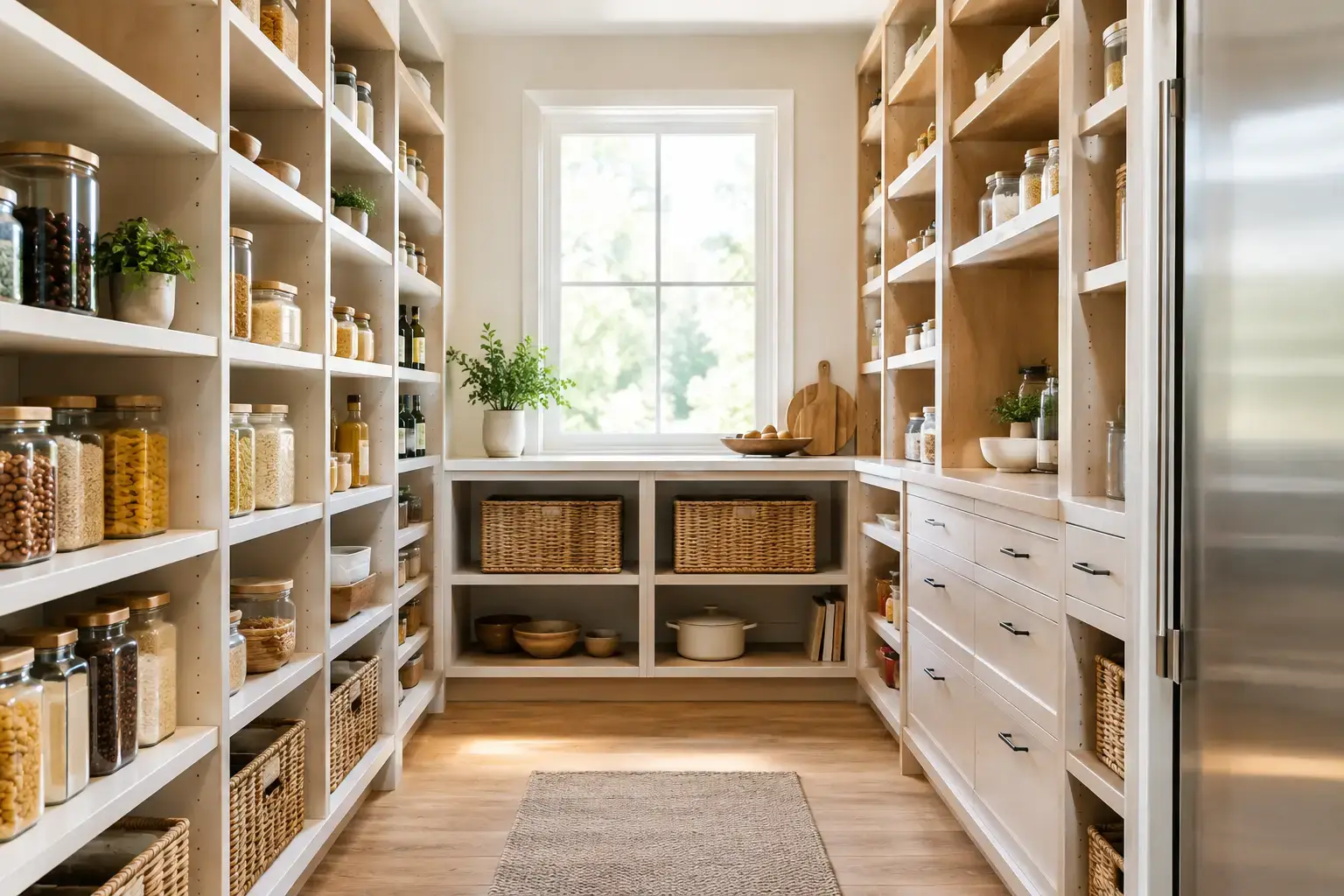
A pantry earns its keep every day. It holds the weeknight staples, the bulk buys, the kids’ snacks, the serving dishes, and often the items that never seem to have a proper home. A good guide to custom pantry design starts there: not with a showroom photo, but with the way your household actually cooks, shops, and puts groceries away.
For homeowners around Notasulga, Auburn, Opelika, and Lake Martin, custom pantry work is a chance to make one of the hardest-working spaces in the house easier to use. Built-in storage can turn a narrow closet, an awkward corner, or a large walk-in room into organized space that looks like it belongs in the home because it was made for it.
Start With Your Daily Routine
Before choosing shelf styles or finish colors, think through what happens in your kitchen over a typical week. A family that makes frequent grocery runs needs a different pantry than a household that buys dry goods in bulk. A lake home may need room for extra paper goods, beverage supplies, and serving pieces for weekends with guests. Retirees may prefer shelves and drawers that reduce bending and reaching.
Take stock of what you store now, including what sits on the counter or gets pushed into another cabinet because the pantry is full. Group items by category: canned goods, baking supplies, snacks, small appliances, linens, pet food, paper products, and oversized cookware. This is the practical information that shapes a pantry that works after the newness wears off.
It also helps to notice how people move through the room. If two people regularly cook at once, aisle space matters. If children pack their own lunches, a lower snack zone can make mornings easier. Custom design should fit the household, not ask the household to adapt to a standard shelf layout.
Measure the Space, Then Look for Constraints
A pantry can look roomy on paper and still feel cramped if door swings, appliance clearance, or awkward wall angles are ignored. Accurate measurements should include wall length, ceiling height, door and window locations, trim, outlets, light switches, vents, and any plumbing or mechanical equipment that cannot be moved.
Depth deserves special attention. Deep shelves hold a lot, but they can become black holes where items disappear behind the front row. In many pantries, shallow shelves for cans, jars, and spices make more sense than one deep shelf. Deeper storage can be reserved for larger appliances, mixing bowls, or paper goods.
Walk-in pantries need a comfortable center aisle. Reach-in pantries need a layout that keeps everyday items visible from the doorway. There is no single right size or arrangement. The right answer depends on the room and what it must hold.
Plan for Real Reach
The most-used goods belong between waist and eye level. That is the easiest area to see and reach without crouching or pulling out a step stool. Put heavier items, such as canned cases or countertop appliances, on lower shelves where they can be lifted safely. Reserve top shelves for seasonal serving pieces, extra containers, or items used only a few times a year.
This sounds simple, but it prevents a common mistake: building a pantry around maximum capacity instead of comfortable access. More storage is valuable only when it remains usable.
Choose Storage That Matches the Item
Fixed shelves are strong, clean-looking, and often the best choice for everyday dry goods. Adjustable shelves offer flexibility as your needs change. Many custom pantries benefit from both: fixed shelves where strength and clean lines matter, adjustable sections for changing packages and household needs.
Drawers are especially useful for snacks, baking tools, tea towels, and smaller packaged items. A full-extension drawer lets you see what is at the back without unloading the front. Pull-out trays can offer similar convenience for bins, potatoes, onions, or heavier pantry supplies.
Consider including a few specialized areas only if they solve a real problem. A vertical slot can keep sheet pans and cutting boards from falling over. A dedicated appliance shelf can clear the kitchen counters. Wine cubbies may suit a home that entertains often, while an open lower bay can hold baskets for quick-grab items.
The goal is not to fill every wall with features. Too many dividers and specialty compartments can limit flexibility later. A well-built pantry should have enough structure to stay organized and enough open space to change with the household.
A Guide to Custom Pantry Design Materials and Finishes
Pantry cabinetry takes more abuse than most people expect. Cans get set down hard, baskets scrape shelf edges, and kids pull at drawers. Material choices should be made with that daily use in mind.
Solid wood components, quality plywood, durable shelf supports, and properly built drawers provide a stronger foundation than thin, mass-produced shelving. Long spans need enough support to avoid sagging over time, particularly when they hold canned goods or small appliances. This is where custom workmanship matters. Shelves should be designed for the load they will carry, not simply made to look good on installation day.
Finish is both a design choice and a maintenance choice. A painted pantry can match kitchen cabinetry or brighten a small room. A clear finish can show off the warmth and character of the wood. In either case, a durable finish that cleans easily is worth considering in a space that sees regular spills and fingerprints.
For homes around Lake Martin, a pantry may be part of a larger renovation or a second-home project. Matching existing trim, cabinetry, or architectural details helps the new work feel established rather than added on. In an older Auburn or Opelika home, the best finish may be one that respects the house’s existing character instead of chasing a short-lived trend.
Do Not Overlook Lighting and Doors
Even the best shelves are frustrating when the back corners are dim. Good overhead lighting makes inventory easier to see and reduces wasted food. Under-shelf or interior lighting can be useful in deeper walk-in pantries, though it should be planned early so wiring and switches are placed cleanly.
Door choice affects the room more than many homeowners expect. A swinging door needs clear floor space. Pocket and sliding doors can help where a traditional door would block traffic, but they bring their own construction considerations. Open pantry entries are convenient, though they require more consistent organization since the contents stay visible from the kitchen.
If the pantry has a door, think about whether the inside of it can serve a purpose. Shallow racks may work for spices or wraps, but only when the door and hinges can handle the added weight without interfering with shelves. In a tight pantry, keeping the door simple is often the better choice.
Build for the Long Term, Not Just Move-In Day
A custom pantry is an investment in daily function. It should account for the way your needs may change: children grow, hobbies shift, appliances come and go, and a home may become a gathering place for family. Adjustable areas, sturdy construction, and thoughtful clearances give the pantry a longer useful life.
It is also wise to be honest about budget priorities. If choices must be made, put the investment into strong materials, solid shelf support, reliable drawer hardware, and a layout that makes sense. Decorative details can be added where they matter most, but they should not come at the cost of durable construction.
A clear conversation with the person building the pantry makes a difference. Share photos of the space, measurements, the items you want to store, and any frustrations with the current setup. Saugahatchee Woodworks approaches custom work around those real needs, building storage that fits the home instead of forcing a one-size-fits-all solution.
The best pantry is not the one with the most shelves. It is the one that makes putting groceries away feel simple, keeps what you need within reach, and still serves your home well years from now.

Leave a Reply