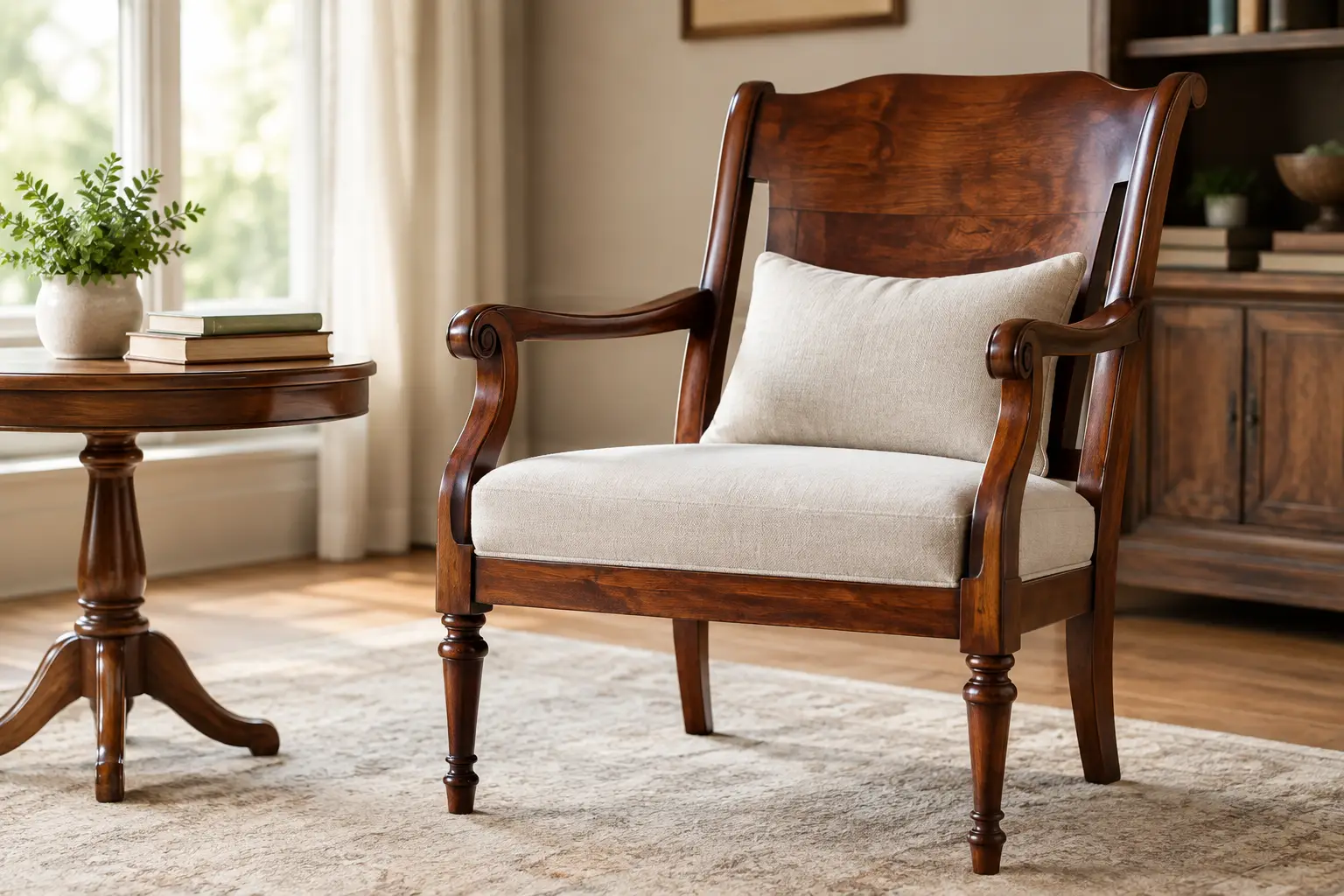
A dining table earns its place in a family long before it becomes an heirloom. It is where homework gets finished, holiday meals stretch into the evening, and everyday life leaves its marks. So, what makes furniture heirloom quality? It is not a label, a high price, or a perfectly staged photo. It is the honest combination of good material, strong construction, useful design, and the ability to serve a home for decades.
Heirloom-quality furniture is built for the life happening around it. It should handle a chair being pulled back thousands of times, a child leaning on the edge of a table, Alabama humidity through the seasons, and the occasional scratch that comes with a well-used home. The goal is not furniture that stays untouched. The goal is furniture worth keeping, repairing, and passing along.
What Makes Furniture Heirloom Quality?
The simplest answer is that heirloom furniture is made to outlast trends and ordinary wear. That requires more than choosing a handsome wood species. Every part of the piece has to work together: the lumber, the joinery, the proportions, the hardware, and the finish.
A well-built piece also has a clear purpose. A custom built-in should make a room easier to use. A lake-house dining table should welcome a crowd without feeling oversized the rest of the year. A storage bench should hold up when people sit down to lace their shoes. When furniture is tailored to the way a family actually lives, it is far more likely to remain useful long enough to become part of the family story.
Solid wood gives a piece a future
Solid hardwood is not automatically the right answer for every component, but it is usually the foundation of furniture meant to last. Woods such as white oak, walnut, maple, cherry, and properly selected pine each bring different strengths, color, grain, and character. The best choice depends on the use of the piece and the look a homeowner wants.
Solid wood can be refinished when the surface becomes worn. It can often be repaired when it is dented, scratched, or damaged. Veneers and manufactured panels have a place in certain projects, especially where stability, cost, or painted finishes make sense. But thin factory veneer over particleboard does not offer the same repair options. Once it chips, swells, or separates, there may be little material left to save.
Good lumber selection matters as much as the species itself. Boards should be properly dried, chosen with an eye for grain direction, and arranged so the finished piece looks intentional from every side. A table top made from carefully matched boards will age with more character than one assembled without regard for movement or appearance.
Joinery does the work no one sees
A beautiful finish can hide weak construction for a while. It cannot keep a wobbly chair tight or prevent a table base from loosening under years of use. Heirloom furniture relies on joinery that gives the wood a mechanical connection, not just a surface bond.
Mortise-and-tenon joints, dovetails, dadoes, rabbets, and properly fitted tongue-and-groove connections have been used for generations because they hold. The right joint depends on the job. Drawers benefit from dovetails or other strong corner joinery. Table aprons need secure connections to legs. Cabinet boxes need square, supported assemblies that will not rack under a load.
This does not mean every visible joint needs to be decorative. Good craftsmanship is often quiet. What matters is that the construction supports the stress the piece will face. A coffee table has different needs than a heavy bookcase, and a wall-mounted cabinet has different requirements than a freestanding dresser.
Wood Movement Must Be Planned For
Wood is a natural material. It expands and contracts as humidity changes, even inside a conditioned home. In the Auburn, Opelika, and Lake Martin area, seasonal moisture changes are a real part of the environment. Furniture built without room for movement can crack, split, or warp as the wood responds to those changes.
An heirloom-quality maker plans for that movement from the start. A solid-wood table top, for example, should be attached in a way that allows it to shift slightly across its width. Wide panels need proper construction. Cabinet doors and drawers need reasonable clearances. These details may not be visible after installation, but they are often the difference between a piece that stays sound and one that fights itself over time.
Plywood can be a smart choice in the right location because high-quality plywood is stable and strong. It may be used for cabinet interiors, drawer bottoms, or painted built-ins. The issue is not whether a project uses one material or another. The issue is whether each material is selected and built around its actual job.
Design Should Outlast a Trend Cycle
Heirloom quality does not require traditional styling. A clean, simple cabinet or modern dining table can become a family piece just as readily as something with turned legs and raised panels. The key is choosing proportions and details that will still feel right after the trend of the moment has moved on.
This is where custom work has an advantage. A piece can be designed around the scale of the room, the height of existing ceilings, the color of surrounding finishes, and the people who will use it. A built-in that looks like it belonged in the house from the beginning can add more lasting value than a standard unit forced into an awkward opening.
Practical details matter, too. Deep drawers, adjustable shelves, cable management, easy-to-reach storage, and durable work surfaces make furniture more useful year after year. Beauty matters, but usefulness is what keeps a piece from being replaced.
A finish should protect without hiding the wood
The finish on a piece of furniture is its first defense against spills, fingerprints, sunlight, and daily handling. It should fit the intended use. A dining table needs more protection than a display shelf. A bathroom vanity needs a finish that can tolerate moisture. A painted built-in may need a different coating system than a natural walnut console.
The best finish is not always the hardest or shiniest one. Some finishes offer excellent protection but can be difficult to repair invisibly. Others are easier to renew but need more regular care. A good builder explains that trade-off and helps the homeowner choose based on how the piece will be used.
A quality finish should also allow the wood to remain wood. Grain, color variation, knots, and small natural changes are part of the material’s appeal. Furniture made from real lumber should not feel like plastic after the final coat is applied.
Repairability Is Part of Lasting Construction
Furniture does not need to remain flawless to be heirloom quality. In fact, pieces that are used and loved will collect evidence of that life. The question is whether a damaged part can be tightened, repaired, refinished, or replaced without throwing the whole piece away.
This is why accessible hardware, replaceable drawer slides, solid wood edges, and sensible construction matter. A loose chair joint can be repaired. A worn top can be refinished. A damaged door can be remade. By contrast, furniture held together with brittle fasteners, thin laminates, and glued-on decorative parts is often designed for replacement rather than restoration.
Heirloom furniture also benefits from straightforward care. Felt pads under legs, prompt cleanup after spills, and occasional checks for loose hardware can prevent small problems from becoming larger ones. No finish is indestructible, and no wood product is completely maintenance-free. Honest expectations are part of buying well.
Craftsmanship Includes Accountability
The final ingredient is the person building the piece. A local woodworker has a reputation attached to every project. That accountability matters when a homeowner is investing in a custom table, built-in, storage solution, or architectural detail meant to serve the property for years.
At Saugahatchee Woodworks, custom work begins with how a piece needs to function in the home, not with a warehouse inventory list. That gives homeowners the chance to make sound decisions about wood, dimensions, finish, and features before the work is built. It also means the finished piece can suit a particular room instead of asking the room to accommodate a standard-size product.
A piece becomes an heirloom when people keep choosing it. They choose it because it works, because it has held up, and because its materials and workmanship still have something to give. Build for those ordinary days around the table, in the entryway, or along the living-room wall, and the years will take care of the rest.

Leave a Reply